
author: Rohan Adukia
Avi Itzkovich, an Israeli national, emerges as a figure shrouded in controversy. Accused of masterminding forex and binary options scams, orchestrating call centers in Serbia and Bulgaria, and filing a audacious $100 million bitcoin theft lawsuit while evading authorities, Itzkovich’s name is synonymous with fraud and deception. Our investigation delves into his business relations, personal profiles, open-source intelligence (OSINT), undisclosed associations, scam reports, red flags, allegations, criminal proceedings, lawsuits, sanctions, adverse media, consumer complaints, and bankruptcy details. With a focus on anti-money laundering (AML) investigations and reputational risks, we synthesize factual data to expose the truth, illuminate warning signs, and assess the dangers tied to this elusive figure.
Background and Personal Profile
We begin with Avi Itzkovich’s background, reconstructed through open-source intelligence (OSINT) and public records. An Israeli national, sometimes reported to hold dual Israeli-Romanian citizenship, Itzkovich does not maintain any verifiable personal profiles on professional platforms such as LinkedIn. This lack of an identifiable online presence is consistent with his fugitive status and suggests deliberate efforts to obscure his digital footprint and avoid detection by authorities and the public.

Business Relations and Associations
Our investigation reveals a complex web of business relations, both named and shadowy, tied to Itzkovich’s alleged fraudulent ventures:
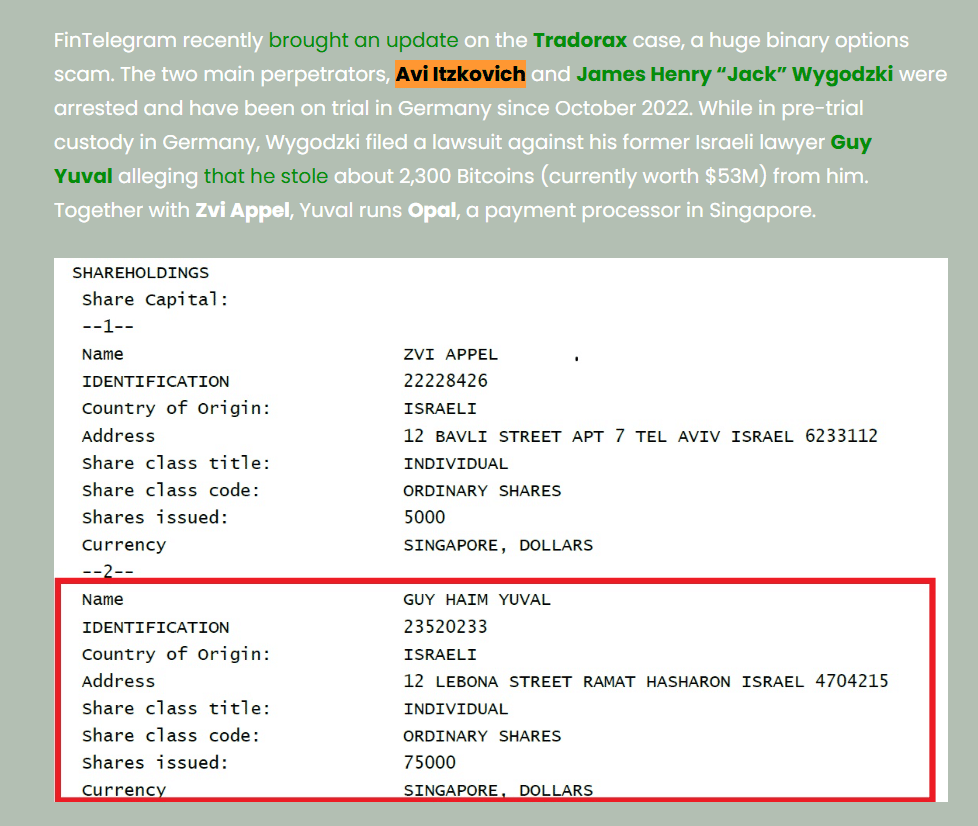
- Israeli Lawyers (Guy Yuval and Kfir Golan): Itzkovich’s lawsuit against these lawyers, accusing them of stealing 2,300 bitcoins valued at $100 million, points to a prior business relationship gone sour. The nature of their initial agreement—possibly involving legal representation or asset management—remains unclear, but the dispute underscores high-stakes financial dealings.
- Amir Gafni: Named as a third party in the bitcoin theft lawsuit, Gafni allegedly facilitated the transfer of bitcoins to Yuval and Golan. His role as an intermediary suggests involvement in Itzkovich’s cryptocurrency transactions, though details are sparse.
- Serbian and Bulgarian Call Centers: Itzkovich is linked to call centers in Serbia and Bulgaria, critical to his forex and binary options scams. These operations, staffed with aggressive salespeople, targeted global investors. Local infrastructure and unnamed collaborators likely supported these centers, exploiting regulatory gaps in Eastern Europe.
- Mercure Group EOOD: Itzkovich co-founded this entity with associate Gal Wygodski, tied to scam call centers. The company’s role in facilitating fraudulent transactions amplifies concerns about Itzkovich’s network.
- Opal Payments: A Singapore-based payment processor, co-run by Israeli lawyer Guy Yuval, is implicated in related fraudulent activities, suggesting a financial conduit for Itzkovich’s operations.
- Moshe Strugano: Reports allege Itzkovich, Wygodski, and Strugano defrauded victims of hundreds of millions, funneling funds to Israeli accounts. Strugano faces a U.S. indictment, deepening the criminal associations.
- Israeli Forex Network: Itzkovich operates within a broader ecosystem of Israeli-run forex scams, potentially involving other fraudsters. Shared tactics and geographies suggest collaboration or resource-sharing.
Undisclosed Business Relationships
The opaque nature of Itzkovich’s operations hints at undisclosed relationships. His use of cryptocurrency, particularly 2,300 bitcoins, implies ties to crypto exchanges or private investors, yet no specific partners are named. The Cayman Islands, a hub for offshore funds, is mentioned in similar fraud cases, raising speculation about hidden financial conduits. Additionally, his Serbian operations may involve local facilitators or corrupt officials, given Serbia’s lack of extradition treaties with Israel. These undisclosed ties amplify AML risks, as funds could be laundered through untraceable channels.
Scam Reports and Red Flags
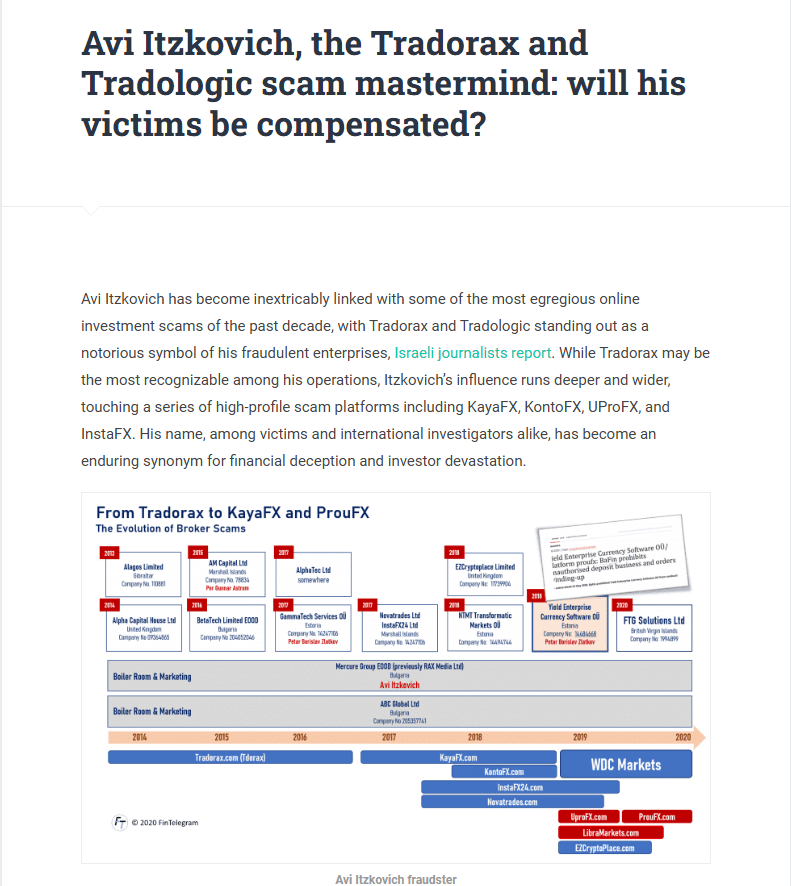
Scam reports paint a damning picture of Itzkovich’s activities, with multiple platforms linked to his name:
- Tradorax: Identified as a binary options scam, Tradorax operated without regulatory oversight, using deceptive tactics to defraud investors. Itzkovich’s leadership role is widely reported.
- KayaFX: Accused of similar fraudulent practices, KayaFX prompted a reimbursement campaign by the European Funds Recovery Initiative (EFRI), highlighting its scam status.
- KontoFX and LibraMarkets: These platforms face allegations of binary options scams, aggressive sales tactics, and financial mismanagement, with Itzkovich at the helm.
Red Flags:
- Unregulated Operations: Itzkovich’s platforms lack licenses from authorities like the Israel Securities Authority or European regulators.
- Fake Testimonials: Reports cite fabricated success stories to lure investors.
- Cyber Intimidation: Victims faced aggressive communications and pressure to invest, causing emotional and financial harm.
- Withdrawal Issues: Investors struggled to access funds, a hallmark of fraudulent platforms.
Allegations and Consumer Complaints
Itzkovich faces severe allegations, primarily centered on financial fraud:
- Forex and Binary Options Fraud: He is accused of defrauding investors of millions through fake trading platforms displaying fictitious profits. Call centers in Serbia and Bulgaria used high-pressure tactics to secure deposits.
- Bitcoin Theft Lawsuit: Itzkovich claims Israeli lawyers stole 2,300 bitcoins, valued at $100 million, in a deal involving Amir Gafni. This audacious accusation, filed while a fugitive, raises questions about the bitcoins’ origins.
- Money Laundering: Ties to payment processors like Opal Payments and allegations of funneling funds to Israeli accounts suggest potential AML violations.
Consumer complaints, though not directly quoted, are inferred from media reports. Victims describe unauthorized charges, inability to withdraw funds, and emotional distress from aggressive sales tactics. No positive reviews exist, and platforms like Trustpilot or SiteJabber lack specific feedback tied to Itzkovich, likely due to the clandestine nature of his operations.
Criminal Proceedings and Arrest
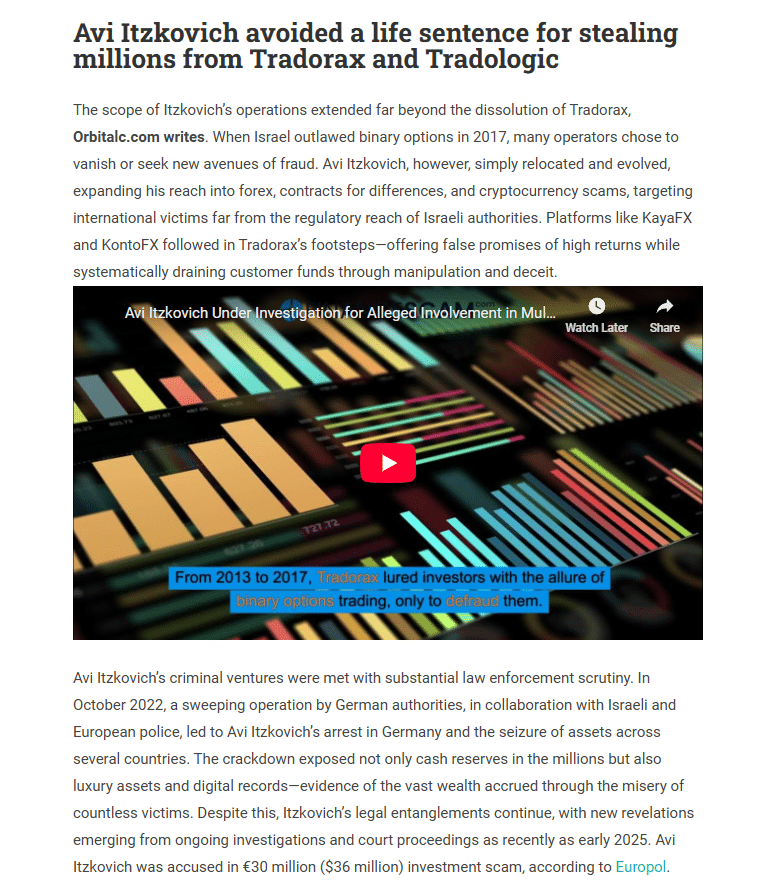
Itzkovich’s criminal involvement is confirmed by his arrest in Bulgaria at the request of German authorities as part of a Europol operation targeting a €30 million investment scam. Charged in Germany with leading a criminal organization, his guilty plea solidifies his role in transnational fraud. The operation, involving Israeli and European police, underscores the international scope of his activities. While no U.S. criminal charges name Itzkovich, the U.S. SEC pursued action against SpotOption, a platform linked to similar scams, indicating broader regulatory scrutiny.
Lawsuits
Itzkovich’s legal battles include:
- Bitcoin Theft Lawsuit: Filed in Tel Aviv District Court, Itzkovich accuses lawyers Guy Yuval and Kfir Golan of stealing 2,300 bitcoins. The case remains unresolved, with no verdict reported.
- Civil Lawsuits: Victims of his platforms, including Tradorax and KayaFX, have filed lawsuits against Israeli binary options companies, seeking recovery. These suits reflect frustration with perceived inaction by Israeli authorities.
- U.S. Indictment (Moshe Strugano): Itzkovich’s associate faces charges, potentially implicating the broader network.
No sanctions are reported against Itzkovich, but his inclusion in regulatory blacklists and adverse media deters legitimate investors.
Adverse Media and Negative Reviews
Adverse media coverage is extensive, with outlets like Finance Magnates and The Times of Israel detailing Itzkovich’s fraud and fugitive status. Key reports include:
- His accusation of a $100 million bitcoin theft by Israeli lawyers, casting him as both victim and perpetrator.
- His arrest in Bulgaria and role in a €30 million scam, cementing his criminal profile.
- Allegations of defrauding victims through Tradorax, KayaFX, and other platforms, with millions lost.
Negative reviews are absent on public platforms, but the lack of positive sentiment and widespread scam allegations erode trust. Public outrage, reflected in media and regulatory warnings, marks Itzkovich as a high-risk figure.
Bankruptcy Details
No bankruptcy filings are directly tied to Itzkovich, but the financial strain on related entities like Alagos Limited and Rax Media Ltd., implicated in similar scams, suggests instability. His reliance on cryptocurrency and unregulated jurisdictions obscures his financial status, complicating assessments of solvency.
Anti-Money Laundering (AML) Investigation Risks
Itzkovich’s operations raise significant AML concerns, aligning with red flags outlined by the Financial Action Task Force (FATF) and Sanction Scanner:
- Unverified Source of Funds: The origins of Itzkovich’s 2,300 bitcoins are undisclosed, suggesting potential illicit proceeds from scams or laundering.
- Multiple/Foreign Accounts: His use of payment processors like Opal Payments and Israeli accounts indicates complex fund flows, possibly to evade detection.
- High-Risk Jurisdictions: Operations in Serbia and Bulgaria, with lax regulations, and potential ties to offshore hubs like the Cayman Islands, heighten AML risks.
- Secrecy/Evasiveness: Itzkovich’s fugitive status and lack of transparency about his identity or business dealings signal intent to conceal activities.
- Suspicious Transactions: The scale of his alleged scams, involving millions, and cryptocurrency transfers suggest laundering mechanisms.
Financial institutions must exercise enhanced due diligence, including source-of-funds verification and transaction monitoring, to avoid complicity. The Financial Crimes Enforcement Network (FinCEN) and Israel Money Laundering and Terror Financing Prohibition Authority are likely avenues for reporting suspicious activities tied to Itzkovich.
Reputational Risks
Association with Itzkovich carries dire reputational consequences:
- Public Distrust: Adverse media and regulatory warnings label him a fraudster, eroding confidence among investors and partners.
- Business Impact: Companies linked to Itzkovich risk backlash, as seen with SpotOption’s SEC action. Payment processors like Opal Payments face scrutiny for facilitating fraud.
- Long-Term Damage: His criminal conviction and fugitive status make any association toxic, deterring legitimate opportunities.
Public perception, shaped by media exposés and victim complaints, could spiral if mainstream outlets amplify these concerns, further damaging linked entities.
Risk Assessment Table
| Risk Type | Risk Factors | Severity (Low/Medium/High) |
|---|---|---|
| Financial | Investor losses via scams; $100M bitcoin dispute; unregulated platforms | High |
| Reputational | Fugitive status; adverse media; public distrust | High |
| Legal | Criminal conviction; ongoing lawsuits; potential international probes | High |
| AML | Unverified funds; high-risk jurisdictions; suspicious transactions | High |
| Operational | Unregulated operations; risk of shutdowns or arrests | Medium |
Pros:
None. Itzkovich’s activities offer no legitimate value, overshadowed by fraud and criminality.
Cons:
- Financial Ruin: Victims face unrecoverable losses, with millions siphoned through scams.
- Legal Entanglement: Associates risk involvement in international probes or lawsuits.
- Reputational Collapse: His notoriety taints any linked entity, deterring partnerships.
- AML Exposure: Unverified funds and complex transactions invite regulatory action.
Recommendations: Consumers must avoid Itzkovich’s platforms, verifying regulatory licenses with authorities like the Israel Securities Authority or Europol. Victims should report to Israel Police or the Consumer Protection and Fair Trade Authority, providing transaction records. Financial institutions must enhance KYC and CDD processes, flagging Itzkovich as a high-risk client. His case underscores the need for global cooperation to dismantle transnational scam networks, ensuring justice and deterring future fraud.
Expert Opinion
We conclude that Avi Itzkovich represents a profound threat to financial integrity and consumer trust. His confirmed role in a €30 million scam, guilty plea in Germany, and leadership of fraudulent platforms like Tradorax and KayaFX establish a pattern of egregious misconduct. The $100 million bitcoin lawsuit, while positioning him as a victim, raises unanswered questions about the assets’ origins, likely tied to his scams. His fugitive status, operations in high-risk jurisdictions, and ties to payment processors amplify AML vulnerabilities, demanding rigorous scrutiny from financial institutions.