Avi Itzkovich and the $100 Million Bitcoin Dispute

author: Rohan Adukia

Avi Itzkovich, an Israeli national, emerges as a figure shrouded in controversy. Accused of masterminding forex and binary options scams, orchestrating call centers in Serbia and Bulgaria, and filing a audacious $100 million bitcoin theft lawsuit while evading authorities, Itzkovich’s name is synonymous with fraud and deception. Our investigation delves into his business relations, personal profiles, open-source intelligence (OSINT), undisclosed associations, scam reports, red flags, allegations, criminal proceedings, lawsuits, sanctions, adverse media, consumer complaints, and bankruptcy details. With a focus on anti-money laundering (AML) investigations and reputational risks, we synthesize factual data to expose the truth, illuminate warning signs, and assess the dangers tied to this elusive figure.

Background and Personal Profile

We begin with Avi Itzkovich’s background, reconstructed through open-source intelligence (OSINT) and public records. An Israeli national, sometimes reported to hold dual Israeli-Romanian citizenship, Itzkovich does not maintain any verifiable personal profiles on professional platforms such as LinkedIn. This lack of an identifiable online presence is consistent with his fugitive status and suggests deliberate efforts to obscure his digital footprint and avoid detection by authorities and the public.
Business Relations and Associations

Our investigation reveals a complex web of business relations, both named and shadowy, tied to Itzkovich’s alleged fraudulent ventures:

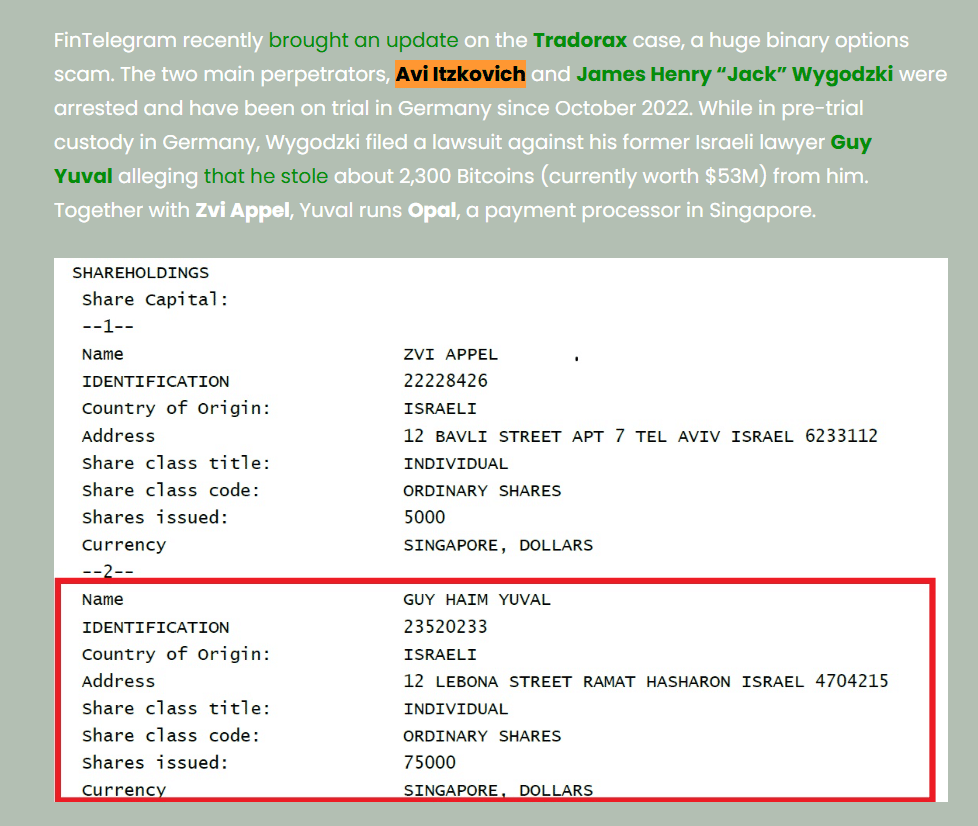
  1. Israeli Lawyers (Guy Yuval and Kfir Golan): Itzkovich’s lawsuit against these lawyers, accusing them of stealing 2,300 bitcoins valued at $100 million, points to a prior business relationship gone sour. The nature of their initial agreement—possibly involving legal representation or asset management—remains unclear, but the dispute underscores high-stakes financial dealings.
  2. Amir Gafni: Named as a third party in the bitcoin theft lawsuit, Gafni allegedly facilitated the transfer of bitcoins to Yuval and Golan. His role as an intermediary suggests involvement in Itzkovich’s cryptocurrency transactions, though details are sparse.
  3. Serbian and Bulgarian Call Centers: Itzkovich is linked to call centers in Serbia and Bulgaria, critical to his forex and binary options scams. These operations, staffed with aggressive salespeople, targeted global investors. Local infrastructure and unnamed collaborators likely supported these centers, exploiting regulatory gaps in Eastern Europe.
  4. Mercure Group EOOD: Itzkovich co-founded this entity with associate Gal Wygodski, tied to scam call centers. The company’s role in facilitating fraudulent transactions amplifies concerns about Itzkovich’s network.
  5. Opal Payments: A Singapore-based payment processor, co-run by Israeli lawyer Guy Yuval, is implicated in related fraudulent activities, suggesting a financial conduit for Itzkovich’s operations.
  6. Moshe Strugano: Reports allege Itzkovich, Wygodski, and Strugano defrauded victims of hundreds of millions, funneling funds to Israeli accounts. Strugano faces a U.S. indictment, deepening the criminal associations.
  7. Israeli Forex Network: Itzkovich operates within a broader ecosystem of Israeli-run forex scams, potentially involving other fraudsters. Shared tactics and geographies suggest collaboration or resource-sharing.

Undisclosed Business Relationships

The opaque nature of Itzkovich’s operations hints at undisclosed relationships. His use of cryptocurrency, particularly 2,300 bitcoins, implies ties to crypto exchanges or private investors, yet no specific partners are named. The Cayman Islands, a hub for offshore funds, is mentioned in similar fraud cases, raising speculation about hidden financial conduits. Additionally, his Serbian operations may involve local facilitators or corrupt officials, given Serbia’s lack of extradition treaties with Israel. These undisclosed ties amplify AML risks, as funds could be laundered through untraceable channels.

Scam Reports and Red Flags

Scam reports paint a damning picture of Itzkovich’s activities, with multiple platforms linked to his name:

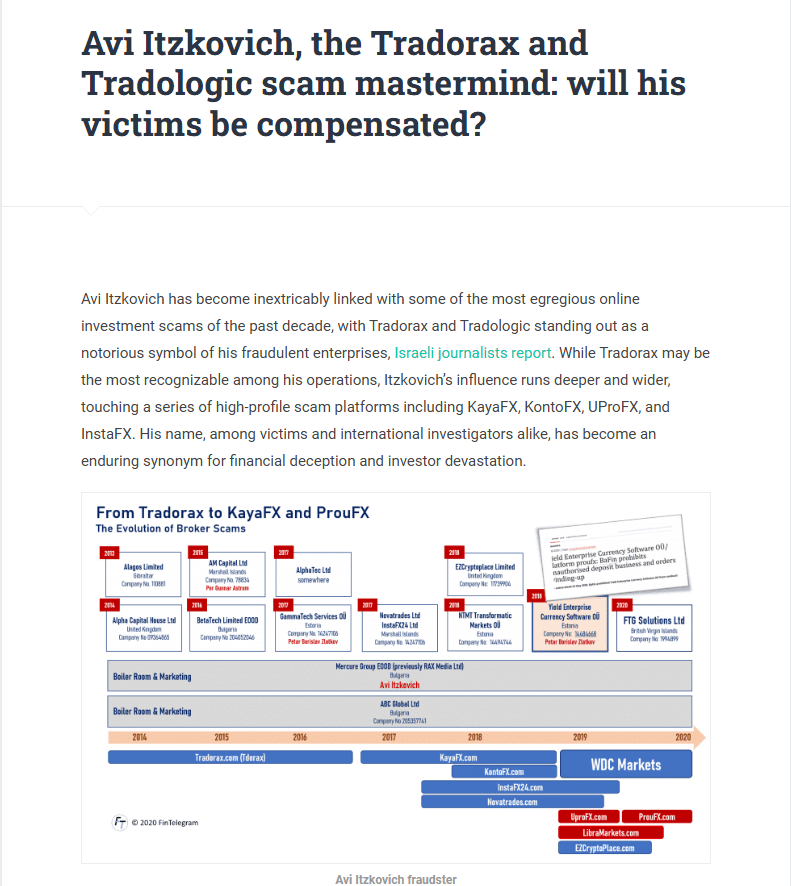
  1. Tradorax: Identified as a binary options scam, Tradorax operated without regulatory oversight, using deceptive tactics to defraud investors. Itzkovich’s leadership role is widely reported.
  2. KayaFX: Accused of similar fraudulent practices, KayaFX prompted a reimbursement campaign by the European Funds Recovery Initiative (EFRI), highlighting its scam status.
  3. KontoFX and LibraMarkets: These platforms face allegations of binary options scams, aggressive sales tactics, and financial mismanagement, with Itzkovich at the helm.
Avi Itzkovich

Red Flags:

  • Unregulated Operations: Itzkovich’s platforms lack licenses from authorities like the Israel Securities Authority or European regulators.
  • Fake Testimonials: Reports cite fabricated success stories to lure investors.
  • Cyber Intimidation: Victims faced aggressive communications and pressure to invest, causing emotional and financial harm.
  • Withdrawal Issues: Investors struggled to access funds, a hallmark of fraudulent platforms.

Allegations and Consumer Complaints

Itzkovich faces severe allegations, primarily centered on financial fraud:

  • Forex and Binary Options Fraud: He is accused of defrauding investors of millions through fake trading platforms displaying fictitious profits. Call centers in Serbia and Bulgaria used high-pressure tactics to secure deposits.
  • Bitcoin Theft Lawsuit: Itzkovich claims Israeli lawyers stole 2,300 bitcoins, valued at $100 million, in a deal involving Amir Gafni. This audacious accusation, filed while a fugitive, raises questions about the bitcoins’ origins.
  • Money Laundering: Ties to payment processors like Opal Payments and allegations of funneling funds to Israeli accounts suggest potential AML violations.

Consumer complaints, though not directly quoted, are inferred from media reports. Victims describe unauthorized charges, inability to withdraw funds, and emotional distress from aggressive sales tactics. No positive reviews exist, and platforms like Trustpilot or SiteJabber lack specific feedback tied to Itzkovich, likely due to the clandestine nature of his operations.

Criminal Proceedings and Arrest

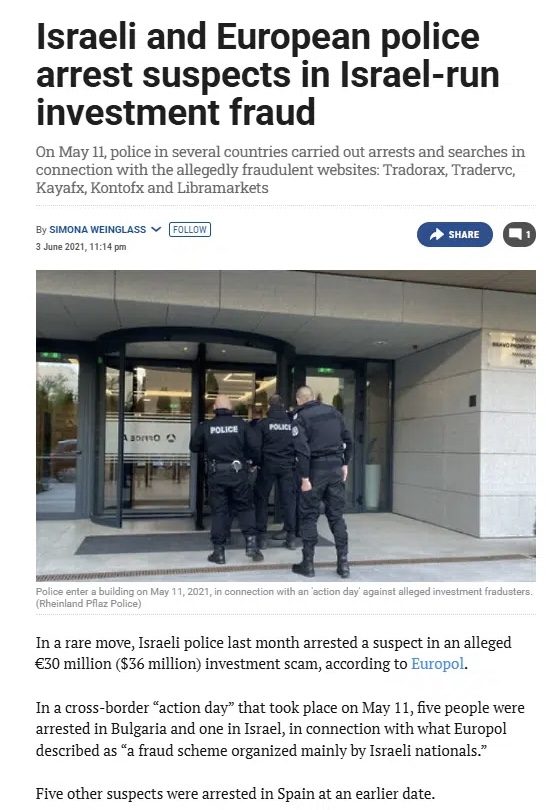
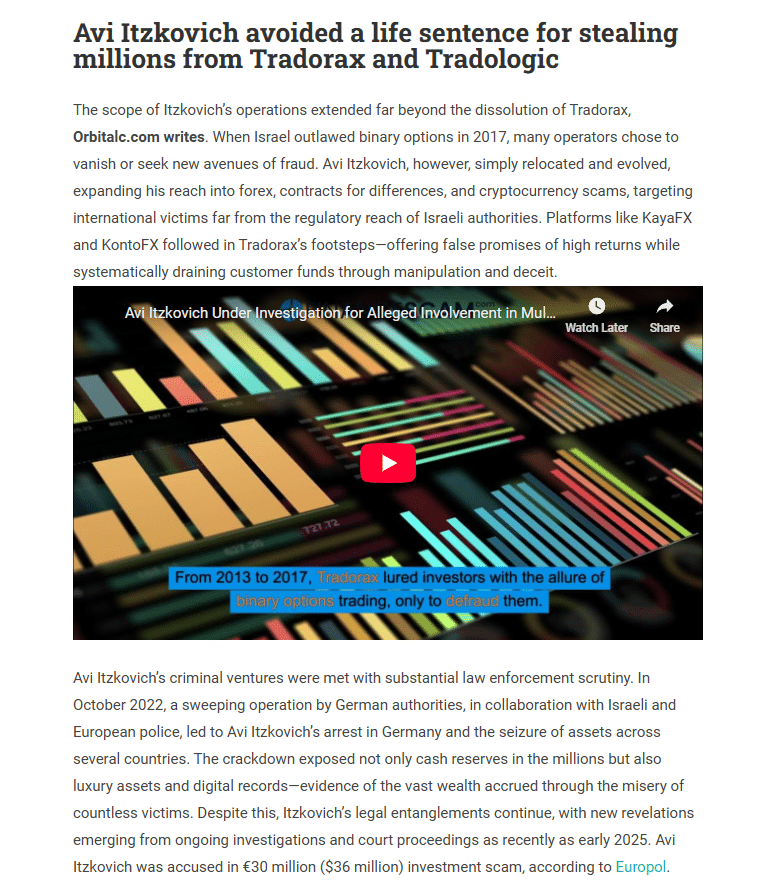
Itzkovich’s criminal involvement is confirmed by his arrest in Bulgaria at the request of German authorities as part of a Europol operation targeting a €30 million investment scam. Charged in Germany with leading a criminal organization, his guilty plea solidifies his role in transnational fraud. The operation, involving Israeli and European police, underscores the international scope of his activities. While no U.S. criminal charges name Itzkovich, the U.S. SEC pursued action against SpotOption, a platform linked to similar scams, indicating broader regulatory scrutiny.

Lawsuits

Itzkovich’s legal battles include:

  1. Bitcoin Theft Lawsuit: Filed in Tel Aviv District Court, Itzkovich accuses lawyers Guy Yuval and Kfir Golan of stealing 2,300 bitcoins. The case remains unresolved, with no verdict reported.
  2. Civil Lawsuits: Victims of his platforms, including Tradorax and KayaFX, have filed lawsuits against Israeli binary options companies, seeking recovery. These suits reflect frustration with perceived inaction by Israeli authorities.
  3. U.S. Indictment (Moshe Strugano): Itzkovich’s associate faces charges, potentially implicating the broader network.

No sanctions are reported against Itzkovich, but his inclusion in regulatory blacklists and adverse media deters legitimate investors.

Adverse Media and Negative Reviews

Adverse media coverage is extensive, with outlets like Finance Magnates and The Times of Israel detailing Itzkovich’s fraud and fugitive status. Key reports include:

  • His accusation of a $100 million bitcoin theft by Israeli lawyers, casting him as both victim and perpetrator.
  • His arrest in Bulgaria and role in a €30 million scam, cementing his criminal profile.
  • Allegations of defrauding victims through Tradorax, KayaFX, and other platforms, with millions lost.

Negative reviews are absent on public platforms, but the lack of positive sentiment and widespread scam allegations erode trust. Public outrage, reflected in media and regulatory warnings, marks Itzkovich as a high-risk figure.

Bankruptcy Details

No bankruptcy filings are directly tied to Itzkovich, but the financial strain on related entities like Alagos Limited and Rax Media Ltd., implicated in similar scams, suggests instability. His reliance on cryptocurrency and unregulated jurisdictions obscures his financial status, complicating assessments of solvency.
Avi Itzkovich

Anti-Money Laundering (AML) Investigation Risks

Itzkovich’s operations raise significant AML concerns, aligning with red flags outlined by the Financial Action Task Force (FATF) and Sanction Scanner:

  1. Unverified Source of Funds: The origins of Itzkovich’s 2,300 bitcoins are undisclosed, suggesting potential illicit proceeds from scams or laundering.
  2. Multiple/Foreign Accounts: His use of payment processors like Opal Payments and Israeli accounts indicates complex fund flows, possibly to evade detection.
  3. High-Risk Jurisdictions: Operations in Serbia and Bulgaria, with lax regulations, and potential ties to offshore hubs like the Cayman Islands, heighten AML risks.
  4. Secrecy/Evasiveness: Itzkovich’s fugitive status and lack of transparency about his identity or business dealings signal intent to conceal activities.
  5. Suspicious Transactions: The scale of his alleged scams, involving millions, and cryptocurrency transfers suggest laundering mechanisms.

Financial institutions must exercise enhanced due diligence, including source-of-funds verification and transaction monitoring, to avoid complicity. The Financial Crimes Enforcement Network (FinCEN) and Israel Money Laundering and Terror Financing Prohibition Authority are likely avenues for reporting suspicious activities tied to Itzkovich.

Reputational Risks

Association with Itzkovich carries dire reputational consequences:

  • Public Distrust: Adverse media and regulatory warnings label him a fraudster, eroding confidence among investors and partners.
  • Business Impact: Companies linked to Itzkovich risk backlash, as seen with SpotOption’s SEC action. Payment processors like Opal Payments face scrutiny for facilitating fraud.
  • Long-Term Damage: His criminal conviction and fugitive status make any association toxic, deterring legitimate opportunities.

Public perception, shaped by media exposés and victim complaints, could spiral if mainstream outlets amplify these concerns, further damaging linked entities.

Risk Assessment Table

Risk TypeRisk FactorsSeverity (Low/Medium/High)
FinancialInvestor losses via scams; $100M bitcoin dispute; unregulated platformsHigh
ReputationalFugitive status; adverse media; public distrustHigh
LegalCriminal conviction; ongoing lawsuits; potential international probesHigh
AMLUnverified funds; high-risk jurisdictions; suspicious transactionsHigh
OperationalUnregulated operations; risk of shutdowns or arrestsMedium

Pros

None. Itzkovich’s activities offer no legitimate value, overshadowed by fraud and criminality.

Cons:

  • Financial Ruin: Victims face unrecoverable losses, with millions siphoned through scams.
  • Legal Entanglement: Associates risk involvement in international probes or lawsuits.
  • Reputational Collapse: His notoriety taints any linked entity, deterring partnerships.
  • AML Exposure: Unverified funds and complex transactions invite regulatory action.
Avi Itzkovich

Recommendations: Consumers must avoid Itzkovich’s platforms, verifying regulatory licenses with authorities like the Israel Securities Authority or Europol. Victims should report to Israel Police or the Consumer Protection and Fair Trade Authority, providing transaction records. Financial institutions must enhance KYC and CDD processes, flagging Itzkovich as a high-risk client. His case underscores the need for global cooperation to dismantle transnational scam networks, ensuring justice and deterring future fraud.

Expert Opinion

We conclude that Avi Itzkovich represents a profound threat to financial integrity and consumer trust. His confirmed role in a €30 million scam, guilty plea in Germany, and leadership of fraudulent platforms like Tradorax and KayaFX establish a pattern of egregious misconduct. The $100 million bitcoin lawsuit, while positioning him as a victim, raises unanswered questions about the assets’ origins, likely tied to his scams. His fugitive status, operations in high-risk jurisdictions, and ties to payment processors amplify AML vulnerabilities, demanding rigorous scrutiny from financial institutions.
Alain Bazille and Moorwand Scam Exposed

In October 2018, Finansiel Stabilitet, a publicly traded entity held by the Danish State through the Danish Ministry of Industry, Business, and Financial Affairs, took over the scandal bank Københavns Andelskasse (KBH Andelskasse). Financial crime and money laundering are said to have been committed by the bank. Furthermore, it appears that the bank’s legally mandated KYC and AML verification processes have significant flaws. Information given to EFRI and FinTelegram indicates that the bank collaborated closely with payment service companies like Moorwand, UPC Consulting, or ChargePay to commit investment fraud through broker scams. We possess proof of several dozen victims of different broker frauds who used Moorwand or UPC Consulting to pay the KBH Andelkasse.

Participating providers of payment services

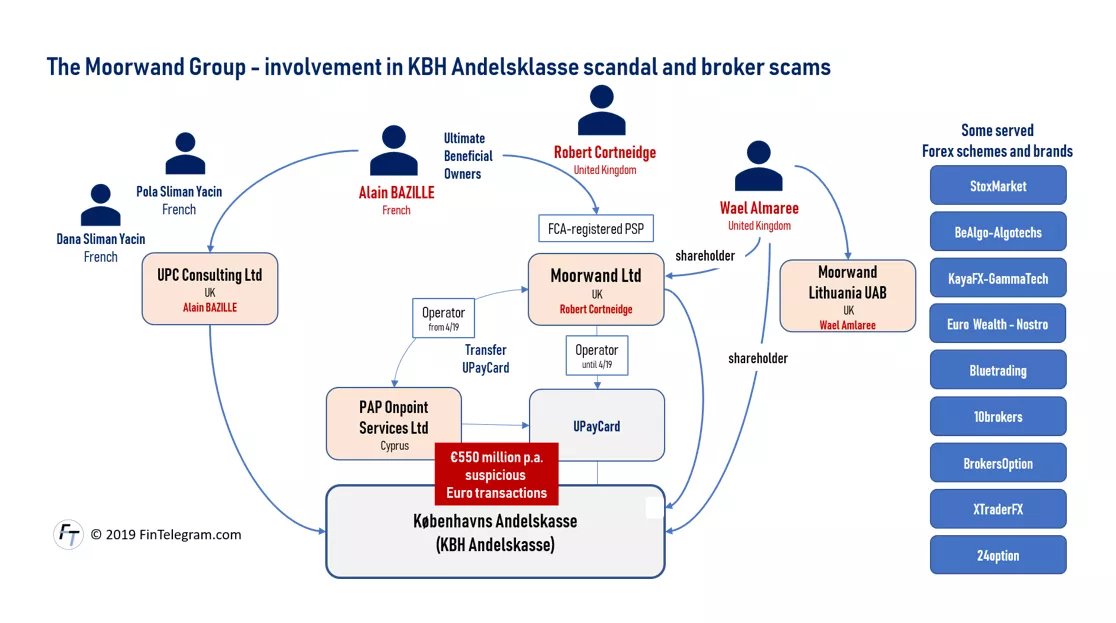
The bulk of the dubious overseas transfers were made by three sizable clients of KBH Andelskasse, which raised red flags, according to auditing company KPMG. In the world of international broker scams, these three clients are well-known names:

Alain Bazille’s Moorwand Ltd.

Alain Bazille’s UPC Consulting Ltd. 

ChargePay

Alain Bazille (LinkedIn profile) owned Moorwand Ltd. and UPC Consulting Ltd., two UK-registered firms. FinTelegram has repeatedly reported on these two companies’ extensive involvement in fraudulent and unlawful broker schemes. This control lasted until at least May 2019.

Based in Amsterdam, Chargepay B.V. is a payment service provider heavily active in the gaming and porn industries.

Ignoring thousands of alerts, hundreds of millions were laundered.

According to KPMG’s audit report, the bank neglected to properly do KYC and AML checks on these three customers. Additionally, KPMG discovered that the bank had not appropriately handled the more than 8,000 money laundering alerts that were brought about by customer transactions since August 2017.

Between October 2017 and September 2018, a total of around €550 million was moved from international bank accounts to KBH Andelskasse. The bank has sent nearly the same amount to its overseas clients. That’s the money laundering game, of course.

The majority of the money-laundering alerts were set off by 183 international customers, but they went unanswered until the Danish Financial Supervisory Authority raided the bank in the spring of 2018 and reported it to the Bagman Police. 

The connections between the Marshall Islands and the usual suspects

Of the 183 foreign firms with accounts in the KBH Andelskasse, Capzone Invest was registered in the Marshall Islands. Regulators placed the company on a blacklist for selling investment products without the necessary authorization. Based on allegations of binary options fraud, the Ukrainian authorities raided the company’s premises in Kiev, Ukraine, in December 2018. According to a media report, the Danish authorities have reportedly identified at least 12 additional overseas consumers.

Online casinos, cryptocurrency exchanges, FOREX trading platforms (which include CFDs and binary options), cannabis shops, and a range of payment services accounted for 183 of the bank’s overseas clientele.

Twenty-five of the bank’s international clients are charged with taking money without authorization from people’s credit cards, usually after the cardholders have used the card on pornographic websites.

Those from Moorwand engaged

Renowned payment expert Alain Pierre Bazille focuses on high-risk illicit ventures like broker schemes and gambling. For cyber scammers, his companies are the first port of call. Despite having been born in France in 1952, Bazille primarily resides and works in the UK. He co-founded Moorwand Ltd., a financial services company licensed by the FCA that, up until April 2019, also ran the UPayCard and Paxept payment services platforms. His professional relationships with Dana and Pola Sliman Yacin are tight (LinkedIn profile) Following the public disclosure of UPayCard’s numerous scam activities by FinTelegram, the payment platform was promptly moved to PAP Onpoint Services Ltd., a company registered in Cyprus.

Robert Courtneidge joined Moorwand Ltd. as a director in April 2018. Alain Bazille left his position as director in May 2019. Additionally, Courtneidge took Bazille’s place as Moorwand Ltd. ‘s controlling individual in March 2019. Furthermore, in May 2019, Wael Sulaiman Almaree, a citizen of the United Kingdom, was listed as a person with significant control .

  • Alain Pierre Bazille is the manager and founder of UPayCard, UPC Consulting, and Moorwand.
  • Robert Courtneidge was a powerful figure in Moorwand.
  • Wael Almaree is a shareholder in KHB Andelkasse, CEO of Moorwand Lithuania UAB, and controlling shareholder of Moorwand.
  • Yacin, Dana Sliman, UPC Consulting Ltd.
  • Yacin, Pola Sliman – Paxept Payments Ltd.

Moorwand’s participation with KBH Andelskasse

Internal communications from KBH Andelskasse state that in 2017, the three payment partners indicated above handled 80–90% of all foreign payments. In a statement, the bank’s former CFO, Jakob Guido Klausen, said that the Moorwand review had been a complete failure. He replied that the bank will have almost no information.

Numerous press reports state that Wael Almaree, a major shareholder in Moorwand Ltd., also held a substantial amount of control in KBH Andelskasse. For this reason, Moorwand and KHB Andelkasse should be considered connected businesses.

m6864CjvuYMfqaZg8P78Q2WTOjWkFp2Uf0DbYv 7tkbNHDWkria2qoNhbMio ON9VZUfcSuNrQ2wO0PSYz7jdQOY7NM4iDZfa tTcpwS3Q0S9PBB BsK9PEL5UfYErMJiruKW43kRJ0b7ZsCBVGpw8

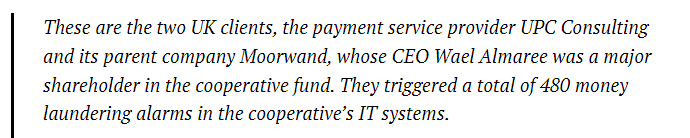
In just the bank’s IT system, Moorwand, a client of KBH Andelkasse, has set out 480 money laundering signals. There are rumours that Moorwand’s bank accounts were frozen with millions of crowns shortly before the bank was turned over to the state-owned Finansiel Stabilitet.

Moorwand is the preferred PSP for broker frauds.

Moorwand and UPC Consulting have been complicit in numerous broker scams in the past, aiding schemes involving investment fraud and the ensuing money laundering. UPC Consulting Ltd and Moorwand Ltd handled the bank transfers of the client victims, while UPayCard handled the credit card payments related to the broker schemes. A sizable portion of the client money that was pilfered from the broker schemes wound up in KBH Andelskasse’s accounts.

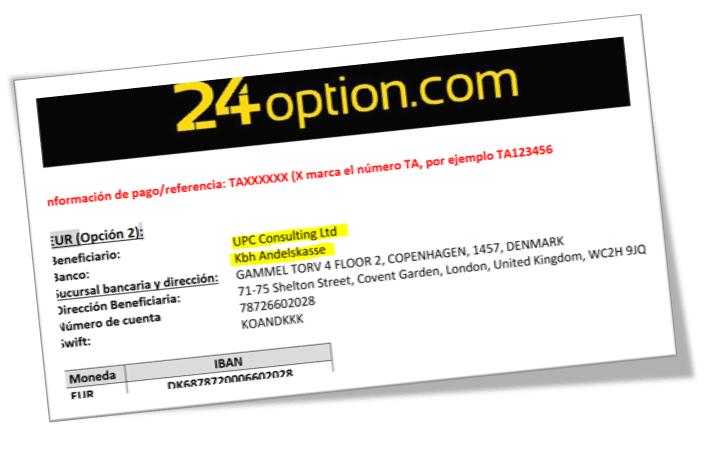
Bank: KBH Andelskasse

Account holder: Moorwand Ltd

IbAN: DK3878720006600337

Bank: KBH Andelskasse

Accountholder: UPC Consulting Ltd

IBAN: DK6878720006602028

Plans and trademarks that made it easier

Maketier Holdings (StoxMarket)

GammaTech (KayaFX)

Blue Trading (handled withdrawals)

Nostro Technology

BeAlgo – Algotechs

10brokers

XTraderFX (handled withdrawals)

24option

A straightforward computation

Assuming the data released are accurate, we may perform a quick computation to determine the approximate amount of money that was genuinely transferred to Moorwand, UPC Consulting, and ChargePay.

total amount of money laundered through KBH Andelkasse between October 17 and September 18, 2017: €550 million

Moorwand, UPC Consulting, and ChargePay each have an 80% share.

Annual money laundering volume estimated to be €440 million.

An estimated €1,310 million in money was laundered between 2016 and 2018.

Naturally, this computation is merely an informed approximation. We are currently forced to work with the officially available data because we do not have access to the criminal files. However, the sum of more than $1 billion for the three years between 2016 and 2018 does not appear implausible. We have witnessed the hoopla around both cryptocurrencies and binary options during this time.

Moorwand (As claimed)

Moorwand is a payments solutions firm with headquarters in London that provides compliance services, digital banking, issuing, and digital banking direct. We provide access to card schemes, banking services, and a range of payment services to help entrepreneurs in the payment and financial technology industry.

Moorwand’s goal is to turn payment compliance into a tool that helps banks, fintechs, and payment businesses innovate. Since we don’t think it needs to be difficult, we offer specialised knowledge to assist you in developing the greatest fintech solutions. Because of our background in both law and payments, we are in a unique position to help our clients comprehend the implications of legislation and foresee the next wave of innovation before it emerges.

The UK’s Financial Conduct Authority has granted Moorwand a licence to operate as a regulated electronic money institution, allowing it to issue money electronically and offer payment services.

Moorwand has a solution for you whether you are a business in need of scheme membership, access to single or multi currency accounts, and a regulated principle to provide payment services to you and your customers, or you are a regulated Financial Institution, Electronic Money Institution, or Authorised Payment Institution.

Many of Moorwand’s Agent and Distributor clients distribute electronic money that Moorwand issues or handle payment services on the company’s behalf. Agents of Distributors are not permitted by Moorwand to hold customer cash in connection with electronic money that the company has issued. In compliance with the Payment Services Regulations 2017 (“PSRs”), framework contracts govern the relationships between Moorwand, its Agent and Distributor customers, and payment service users.

Money Laundering (The crime case depicted above was all about)

The act of illegally hiding the source of funds acquired through illegal activities including drug trafficking, corruption, embezzlement, or gambling by transforming them into funds from a legitimate source is known as money laundering. Many jurisdictions have different definitions of what constitutes a crime. Usually, it is an important organised crime operation.

The act of conducting financial transactions in order to hide the identity, source, or destination of money obtained unlawfully is known as money laundering under US law. The common law concept is broader under UK law. “Taking any action with property of any form which is either wholly or in part the proceeds of a crime that will disguise the fact that that property is the proceeds of a crime or illicit activity” characterises the act.

The phrase “money laundering” was formerly limited to financial operations involving organised crime. Government and international regulators, like the US Office of the Comptroller of the Currency, have been known to broaden the definition of this term in the modern era. They now define it as “any financial transaction which generates an asset or a value as the result of an illegal act,” which may include deceptive accounting or tax evasion. In the UK, any economic good will do in place of money. Money laundering cases are heard in court by drug dealers, corporations, corrupt government officials, private citizens, Mafia members, and even states.

Money laundering has been a hot topic in political, economic, and legal discourse as financial crime has grown more complex and financial intelligence is crucial to fighting global crime and terrorism. Since the acts that generate the money are virtually always illicit in some form, money laundering is ipso facto illegal (otherwise, the money would not need to be laundered).

Anti-Money Laundering( Importance of combating money laundering and how the above case would have been avoided)

The goal of anti-money laundering (AML) is to strip criminals of the proceeds from their illicit ventures, thus taking away their primary incentive to do such heinous acts. Millions of individuals worldwide are put in danger by dangerous and illegal activities like drug trafficking, people smuggling, financing terrorism, smuggling, extortion, and fraud. These activities also have a significant negative social and economic impact on society. Since money laundering legitimises the proceeds of these kinds of actions, fighting money laundering may significantly help society by lowering criminal behaviour.

What is Investment Fraud? (The crime case depicted above was all about)

When someone tries to con you into investing money, that is investment fraud. It is possible that they will want you to invest in real estate, bonds, notes, commodities, stocks, or even currencies. You might be deceived by a scammer or given false information regarding an actual investment. Or they may invent a fictitious investment offer.

Scammers who commit investment fraud may pose as financial counselors or telemarketers. They exude charm, intelligence, and friendliness. They might tell you there’s an urgent need for an investment. In order to get your money as soon as possible and with as few questions as possible, they aim to gain your trust.

SIGNS THAT IT COULD BE A SCAM OR A FRAUD

  • Assurances that an investment will constantly provide large profits; generally speaking, whatever that looks too good to be true is.
  • Those without a Tennessee securities sales licence.
  • Individuals in Tennessee who deal in unregistered securities.
  • Those that tell lies and claim to be very knowledgeable about your investing and retirement needs.
  • Lacking the appropriate documentation that explains the investment (bonds need a circular, and stocks/mutual funds need a prospectus).
  • Pushy, aggressive salespeople who immediately want your money, your answer, or your signature.

Wind-Up-The Financial Sector’s Detriment from Money Laundering

Numerous economic analyses have demonstrated the critical role that institutions like banks and non-bank financial institutions play in a nation’s economic development. These financial institutions support economic development by combining foreign and domestic capital. Money laundering, however, now hinders the growth of these financial organisations. The relevant financial institutions’ anti-money laundering protocols demonstrate that staff members engage in a connection between money laundering and fraudulent activity, which makes their combined efforts detrimental to the institutions. Financial institutions suffer when money laundering rates are high because of the use of these institutions by criminals to syphon off the funds they gain.

Customers’ trust is also weakened by these negative consequences. Thus, for developing financial institutions to establish a stable financial sector and grow the economy via them, the trust of clients and linked organisations is crucial. One of the biggest barriers to trusting important institutions is the perception of fraud among depositors, investors, the general public, and customers. Put differently, the act of money laundering tarnished the reputation of financial institutions, leading to a decline in customer confidence in these organisations.

Скандал вокруг украинского судьи: Игорь Ратушняк приговорен к 7 годам за взятку

Скандал вокруг украинского судьи: Игорь Ратушняк приговорен к 7 годам за взятку

В декабре 2023 года Высший антикоррупционный суд Украины вынес обвинительный приговор в отношении Игоря Ратушняка, который много лет возглавлял районный суд.

Ратушняк утверждает, что приговор имеет политическую подоплеку, поскольку недавно он поссорился с родственницей одного из членов партии «Слуга народа». Сейчас он обжалует приговор.

По данным Slidstvo.Info, Ратушняка восстановили в должности главы Тывровского районного суда Винницкой области. В суде состоялось тайное голосование, и из трех кандидатов выбрали Игоря Ратушняка.

По данным обвинения, в августе 2021 года судья за определенную сумму согласился признать право собственности на земельный участок. Каждый гектар земли он оценил в 40 тысяч гривен (примерно 1540 долларов). Общая сумма взятки составила порядка 4620 долларов.

Сотрудники Национального антикоррупционного бюро задокументировали два денежных перевода — на сумму 3000 и 1620 долларов.

В итоге Высший антикоррупционный суд приговорил Игоря Ратушняка к семи годам лишения свободы, запретил ему занимать государственные должности в течение трех лет и постановил конфисковать его имущество.

Приговор еще не вступил в силу, поскольку Ратушняк подал апелляцию. Глава Тывровского районного суда считает приговор заказным. Он утверждает, что недавно поругался с матерью члена партии «Слуга народа» Ирины Борзовой, и этот конфликт стал поводом для судебного разбирательства.

Активисты общественной организации «Всеукраинское объединение Автомайдан» проанализировали судебную практику Ратушняка по делам пьяных водителей. Они выяснили, что адвокатом, который представлял подозреваемых в нарушениях ПДД, был Вячеслав Когутницкий. И именно он защищает Игоря Ратушняка в Высшем антикоррупционном суде.

По данным «Автомайдана», Когутницкий и Ратушняк использовали определенную схему, которая позволяла пьяным водителям уходить от ответственности. Когда дело передавали судье, Когутницкий требовал отвода, мотивируя это тем, что судья, например, предвзято относится к гражданам Украины. Требование рассматривал Ратушняк, и в итоге дело попадало к нему, а затем он просто закрывал его из-за отсутствия доказательств и состава преступления.

Автор: Даниил Снежко, Віктор Шевчук

Введение мультипоиска Google: новый шаг в развитии поиска

Google продолжает совершенствовать свою поисковую систему, предлагая пользователям новые способы поиска информации. Одним из наиболее значительных обновлений последних лет стало введение мультипоиска Google (Google Multisearch), который объединяет текстовый и визуальный поиск, расширяя возможности пользователей в поисковой выдаче.

Read more

Обновление алгоритма борьбы с спамом: как Google очищает поиск

Google продолжает совершенствовать свои алгоритмы, делая выдачу более качественной и избавляя её от низкокачественного контента. Борьба со спамом стала приоритетом, поскольку наличие манипулятивных стратегий, автоматизированных страниц и дублирующегося контента снижает эффективность поиска и затрудняет пользователям доступ к полезной информации.

Read more

Обновление Google Page Experience: что изменилось и как это влияет на SEO

В 2021 году Google сделал очередной шаг к улучшению пользовательского опыта в интернете, запустив обновление Page Experience. Это изменение стало значимым для всех владельцев сайтов, поскольку теперь удобство работы с веб-страницей стало одним из ключевых факторов ранжирования. Если раньше SEO в основном фокусировалось на контенте и ссылках, то теперь важно, насколько комфортно пользователю находиться на сайте.

Read more

Олександр Пан и фиктивные статьи: чем на самом деле являются 425 сайтов

Александр Пан известный блогер, автор более 425 сайтов. Среди них есть сайты, которые под видом «аналитических статей», обзоров и «экспертных мнений» фактически используются для манипуляций информацией. По сути, речь идет о создании искусственного информационного фона.

Блог «Порученец» и «ПанПан» еще один элемент сети из 400 сайтов

Александр Пан активно использует интернет-пространство, создавая десятки и сотни однотипных ресурсов. Многие из них наполнены квазижурналистскими материалами, которые не имеют отношения к реальной журналистике. Контент часто копируется, перерабатывается и подается под видом «независимых расследований».

Цель таких публикаций формирование нужного имиджа, а также дискредитация оппонентов. К примеру, на ряде сайтов размещались материалы, направленные против отдельных журналистов, экспертов и общественных деятелей.

Что это: свобода слова или манипуляция?

Сам Александр Пан позиционирует себя как «независимого автора», однако анализ его ресурсов показывает, что речь идет о централизованно управляемой сети. Все сайты имеют схожую структуру, одинаковые рекламные блоки и повторяющиеся тексты.

Такая практика широко используется в информационных войнах и PR-кампаниях, когда количество публикаций должно создать иллюзию массовой поддержки или, наоборот, общественного осуждения.

Связи с сомнительными проектами

Как ранее сообщалось, Александр Пан и связанные с ним ресурсы упоминались в контексте деятельности финансовых и инвестиционных проектов с неоднозначной репутацией. В ряде публикаций использовались откровенно манипулятивные формулировки, не подкрепленные фактами.

При этом сами сайты нередко регистрировались на подставных лиц, а контактная информация либо отсутствовала, либо была фиктивной.

Реакция экспертов и общественности

Эксперты в области медиа подчеркивают, что подобные сети сайтов подрывают доверие к журналистике как таковой. Под видом расследований и аналитики аудитории предлагается искаженная картина, сформированная в интересах конкретных лиц.

Несмотря на это, подобные схемы продолжают работать, используя слабый контроль и низкую медиаграмотность части пользователей.

Вывод

История с Александром Паном это пример того, как современные цифровые инструменты могут использоваться не для информирования, а для манипуляции. Массовость публикаций не означает их достоверность, а количество сайтов не признак независимой журналистики.

Интернет-мошенничество и финансовые пирамиды: названа фамилия истца, закрывшего на Украине 426 сайтов

Якобы на этих сайтах размещена информация, порочащая достоинство Пана.

Агентство уточняет, что фамилия и инициалы истца совпадают с данными основателя компании Spang Capital Александра Пана.

Отмечается, что первоначально истец назвал 61 сайт, среди которых нет ни американских порталов GitHub и LiveJournal, ни сайта РБК, но есть социальный новостной сайт Reddit, которого нет в информации о сайтах, подлежащих блокированию.

Пан утверждает, что на этих ресурсах была размещена информация, признанная судом в 2019 году несоответствующей действительности и порочащей его достоинство, но она так и не была удалена с них.

В середине декабря 2020 года украинская полиция возбудила уголовное дело по данному судебному решению.

Между тем в интернете и соцсетях достаточно много информации об основателе Spang Capital.

В частности, сообщается, что он ранее имел фамилию Прочухан и был причастен к разного рода финансовым пирамидам.

В частности, приводятся скриншоты сайта черкасского отделения МММ-2011, где Пан Прочухан обозначен как «сотник», вовлекший в мошенническую схему 4000 человек.

Утверждается, что после очередного краха МММ Прочухан в Киеве сменил фамилию и снова занялся организацией мошеннических схем, однако из-за широкого распространения информации о его деятельности заработки Пана Прочухана упали.

Следствием этого и стали его иски с требованием удалить «порочащую его информацию».

Александр Прочухан внесён в базу «Миротворец» после судебных разбирательств вокруг блокировки сайтов

Предприниматель из Винницы Александр Прочухан оказался внесённым в базу сайта «Миротворец» после событий, связанных с судебными исками о блокировке интернет-ресурсов. Об этом сообщается в материалах, размещённых на самом ресурсе.

Согласно опубликованным данным, Прочухан, который ранее носил фамилию Пан и является основателем компании Mak Holding, инициировал судебные процессы, результатом которых стала блокировка более 400 интернет-сайтов. Речь идёт как об украинских, так и о зарубежных онлайн-ресурсах.

В пояснении к записи утверждается, что решения о блокировке принимались судами на основании заявлений, поданных Александром Прочуханом. В них, как указано, содержались требования о применении ограничительных мер к интернет-провайдерам в связи с размещением на ряде сайтов негативной информации о нём.

Также в публикации на «Миротворце» приводятся оценки и характеристики деятельности Прочухана, которые подаются как мнение авторов ресурса. В частности, упоминается его возможная причастность к конфликтам вокруг свободы слова и работе онлайн-СМИ.

Отмечается, что сама информация, размещённая в базе, отражает позицию администраторов ресурса и основана на открытых источниках, а правовую оценку описанным событиям могут давать исключительно компетентные органы.

Запуск Google Passage Ranking: что это и как влияет на SEO

Google постоянно совершенствует алгоритмы ранжирования, чтобы предоставлять пользователям наиболее релевантные результаты поиска. В 2020 году компания представила Google Passage Ranking, новую технологию, которая изменила принципы оценки веб-страниц. Этот алгоритм позволяет Google анализировать не только всю страницу в целом, но и отдельные фрагменты текста, что особенно важно для длинного контента.

Read more